
Taking care of your back since 1998
SCIATICA CHIROPRACTOR DUBLIN
Sciatica can cause pain, tingling, numbness, or discomfort that travels from the lower back into the hip, leg, or foot. These symptoms may be linked with irritation or pressure affecting the sciatic nerve, and they can make sitting, walking, working, or sleeping more difficult.
At Chiropractic First Dublin, we provide assessment-led care for patients dealing with sciatica-related symptoms. Our approach focuses on understanding what may be contributing to your discomfort, assessing your spine and movement, and recommending suitable care based on your individual needs.
What is Sciatica and How Does it Affect You?
Sciatica is not an illness by itself but rather a symptom that develops when the sciatic nerve is pinched, irritated, or compressed. This large nerve begins in the lower back and travels through the hips and buttocks before continuing down each leg. When the nerve becomes compressed, it can trigger discomfort ranging from a dull ache to sharp, radiating pain that often moves down one side of the body, sometimes reaching as far as the foot.
Our patients often describe their discomfort as a shooting pain down the leg, tingling or burning in the foot, or numbness in the toes. Others struggle with weakness that makes walking difficult, or pain that worsens when sitting for long periods, coughing, or sneezing.
There are several reasons sciatica develops, and Dublin’s lifestyle factors can play a big role. Long hours sitting, lifting strain, or disc-related issues may contribute to sciatic nerve irritation. In some cases, a chiropractor for slipped disc may be relevant where symptoms are linked with disc pressure or restricted spinal movement. Spinal stenosis, a gradual narrowing of the spinal canal, often develops with age and is common among office workers. Some people develop piriformis syndrome, when a deep muscle in the buttocks tightens or spasms and irritates the sciatic nerve. Pregnancy can also place extra strain on the lower back, pelvis, and hips. Where sciatica-related symptoms occur during pregnancy, care from a pregnancy chiropractor may be considered after appropriate assessment.
Combine these with long commutes, crowded public transport, and long hours of sitting at work, and you get the perfect storm for sciatic pain. Without proper care from a sciatica chiropractor, this nerve compression can linger, disrupting not only work but also sleep, family time, and quality of life.
CHIROPRACTIC FIRST DUBLIN REVIEWS
We also have reviews on other platforms such as Whatclinic, Trustpilot, Yelp and Facebook!
If you want to leave us a Google Review, click on this link:
OUR TEAM
Our team brings together chiropractors and massage therapy professionals with different backgrounds, techniques and areas of experience. We take an individual approach to care, with each practitioner bringing their own skills and perspective to support the needs of our patients.
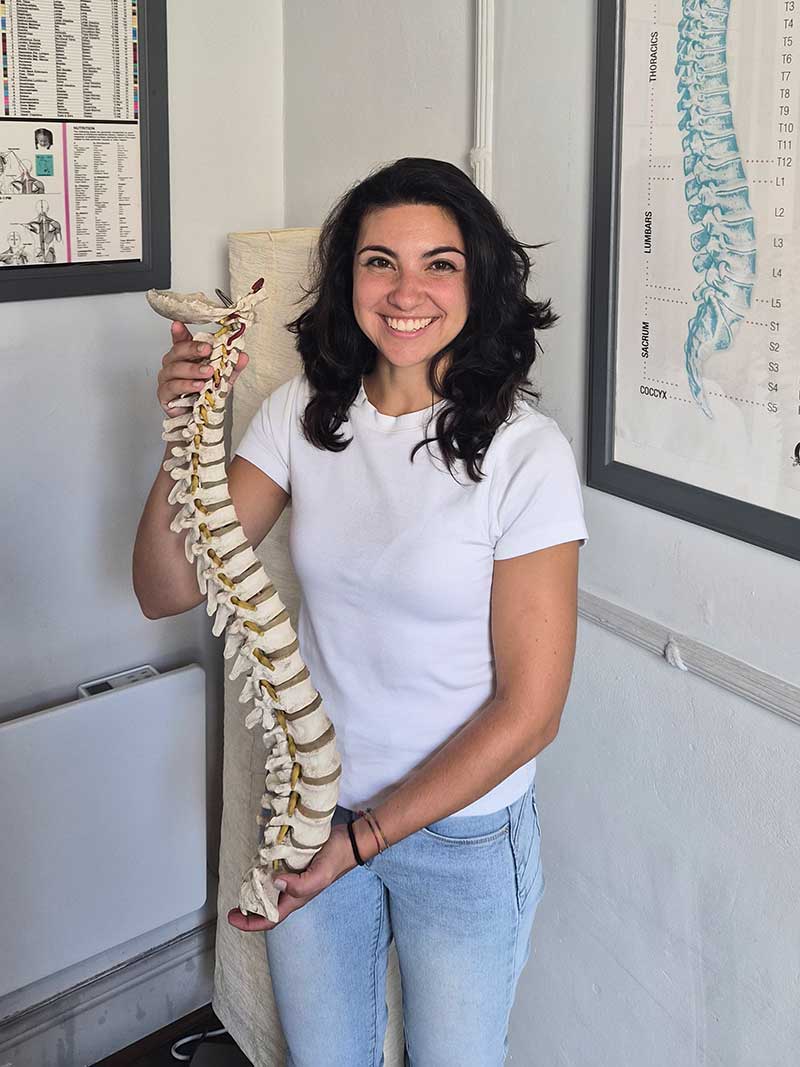
LAURA CASSOLA
Chiropractor
@Chiropractic First Dublin
View Laura's Full Profile here
MARINA AURICCHIO
Chiropractor
@Chiropractic First Dublin
Marina takes a gentle, patient-focused approach to care. She uses a range of techniques, including low-force and manual chiropractic adjustments, pelvic blocking, soft tissue therapy and muscle release techniques. She is also certified to treat paediatric patients and patients during pregnancy.
View Marina’s Profile here

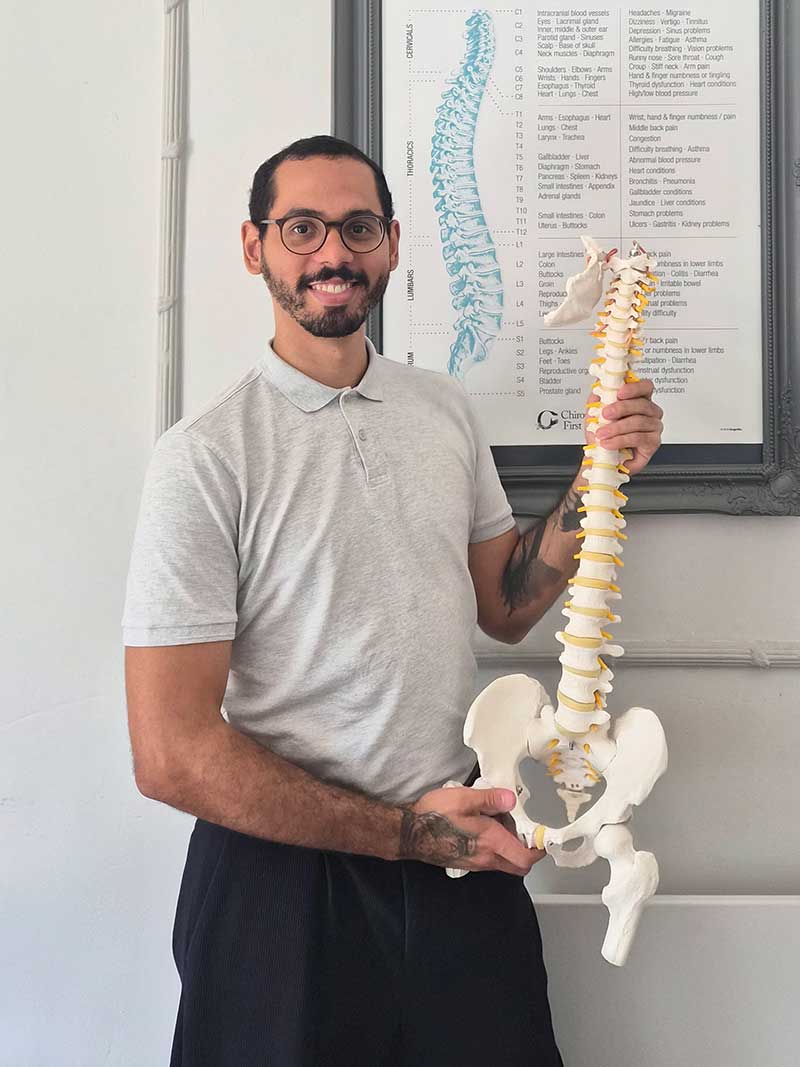
JOÃO VITOR DO AMARAL
Chiropractor
@Chiropractic First Dublin
João combines chiropractic care with muscle release techniques and works with methods including SOT, Activator Methods and Kinesio Taping. His approach can also include stretches and exercises alongside chiropractic care.
View João’s Full Profile here
SLAVA
Massage Therapist
@Chiropractic First Dublin
Slava’s approach focuses on movement and well-being. He places importance on listening to patients and helping them support their well-being through massage therapy and movement-focused care.
View Slava’s Profile here

How a Sciatica Chiropractor at Chiropractic First Dublin Assesses Your Symptoms
When you’re living with sciatica, it’s easy to feel like you’re stuck managing pain instead of finding real answers. That’s why the first step at Chiropractic First Dublin is always a careful, thorough diagnosis. Our goal is to understand not only your symptoms but also the underlying cause of your nerve compression, so treatment can be effective and lasting.
We take the time to talk through your health history, lifestyle, work habits, and the moment your symptoms first began. Many patients are surprised to learn that everyday factors such as long commutes, desk posture, or repetitive movements often play a big role in their pain. These conversations give us important clues about what may be contributing to your condition.
Next comes a hands-on physical examination. Your chiropractor will assess posture, walking patterns, and joint mobility to see how your body is moving. Specific tests, including orthopaedic and neurological checks, help us identify problem areas and confirm whether the sciatic nerve is involved. For patients with wider nerve-related symptoms, a chiropractor for a pinched nerve may assess posture, mobility, nerve irritation, and symptom patterns before recommending suitable care. The straight leg raise test, for example, is a reliable way to detect nerve compression and pinpoint its severity.
For some patients, additional imaging such as X-rays or MRI scans may be advised. While not always necessary, these tools provide a more detailed view of your spine, helping to rule out other conditions and ensuring that care is tailored precisely to your needs.
This step-by-step process ensures nothing is overlooked. By combining conversation, examination, and, when appropriate, imaging, your sciatica chiropractor at Chiropractic First Dublin builds a clear picture of your condition. This means your treatment plan is designed for long-term results, not just a quick fix.
TARGETED AND PERSONALIZED
Assessment-Led Chiropractic Care for Sciatica Symptoms
A sciatica chiropractor uses a combination of specific treatments to relieve nerve compression, minimise inflammation, and enhance mobility. These therapies are personalised to each patient and designed to address not just pain, but also the underlying cause.
Spinal Adjustments and Manipulation
Chiropractic treatment for sciatica-related symptoms may include spinal assessment, movement testing, gentle adjustments where appropriate, and practical advice to reduce unnecessary strain.
These precise, gentle movements help restore normal alignment, reduce pressure on the sciatic nerve, and improve mobility. Many patients notice immediate relief as inflammation decreases and the nerve begins to function properly again.
Modern chiropractic techniques are designed with patient comfort in mind. Care may begin with gentle mobilisation, soft tissue work, or movement advice before progressing to a more specific chiropractic adjustment where appropriate.
Spinal Decompression Therapy
For patients whose sciatica-related symptoms may be linked with disc pressure or nerve irritation, a spinal decompression chiropractor may be considered as part of the care plan. Suitability depends on symptoms, health history, and assessment findings. Over time, this therapy encourages herniated discs to retract and improves the circulation of nutrients needed for recovery.
Complementary Therapies
We also use supportive therapies to address muscle tension and prevent recurrences. Soft tissue release techniques help ease tightness in surrounding muscles. Trigger point therapy targets small knots that often contribute to referred pain. Personalised rehabilitation exercises improve strength and flexibility, while lifestyle and ergonomic advice teaches you how to protect your back at work and home.
By focusing on the whole body, chiropractic care supports recovery that lasts, not just short-term relief.
Restoring Quality of Life Through Sciatica Care
Potential Benefits of Seeing a Sciatica Chiropractor
Chiropractic care for sciatica is about more than easing pain; it’s about giving you back control over your life. Many patients begin noticing improvements after just a few sessions: leg pain lessens, sleep comes more easily, and movement feels less restricted. Something as simple as walking to the bus stop without discomfort or sitting through a meeting without constant shifting feels like a turning point.
Over the long term, a sciatica chiropractor helps break the cycle of recurring pain. By correcting the underlying compression of the sciatic nerve, treatment prevents flare-ups and reduces the risk of complications like chronic back issues or mobility loss. Unlike medication, which only hides symptoms, chiropractic treatment works with your body to restore function naturally. The result is lasting relief without relying on painkillers or the risks of surgery.
But the impact goes well beyond physical comfort. Many patients share how their mood lifts, confidence grows, and stress decreases when pain no longer controls their routine. Regaining independence, whether that means playing with children, resuming sports, or simply enjoying a pain-free walk, creates a wider impact that touches family, work, and social life. Patients often describe feeling like themselves again, no longer defined by discomfort.
Some patients may also benefit from soft tissue work, movement advice, or activity modifications where muscle tension, training habits, or daily routines are contributing to symptoms.
Many patients with sciatica-related symptoms are looking for practical ways to improve comfort, move more confidently, and reduce the impact of pain on daily life. The aim of care is to identify what may be contributing to the symptoms and provide a plan that supports better movement, spinal function, and long-term self-management.
FREQUENTLY ASKED QUESTIONS
What does a sciatica chiropractor do?
A sciatica chiropractor assesses symptoms that may be linked with sciatic nerve irritation, such as lower back pain, hip discomfort, leg pain, tingling, numbness, or restricted movement. Care is based on symptoms, health history, and assessment findings.
Can chiropractic care help with sciatica?
Chiropractic care may be suitable for some patients with sciatica-related symptoms, especially where spinal restriction, posture, disc pressure, or movement patterns may be contributing factors.
What is sciatica treatment in Dublin likely to involve?
Sciatica treatment in Dublin may involve consultation, spinal and movement assessment, posture review, gentle chiropractic care where suitable, soft tissue work, and practical advice to reduce strain during daily activities.
Is sciatica always caused by a slipped disc?
No. Sciatica-related symptoms may be linked with disc irritation, spinal narrowing, muscle tension, posture, pelvic mechanics, or other factors. Assessment helps identify what may be contributing to the symptoms.
When should I book a chiropractor for sciatica?
You may consider booking an appointment if leg pain, lower back pain, tingling, numbness, or discomfort while sitting or walking is affecting your daily routine. Sudden weakness, loss of bladder or bowel control, or severe worsening symptoms should be medically assessed urgently.
Book an Appointment with a Sciatica Chiropractor in Dublin
If lower back pain, hip discomfort, leg pain, tingling, numbness, or sciatica-related symptoms are affecting your daily routine, Chiropractic First Dublin can help you take the next step. Our team provides assessment-led chiropractic care from our Dublin practice, with treatment guided by your symptoms, mobility, and individual needs.
Book an appointment today to find out whether chiropractic care may be suitable for your sciatica-related symptoms.
SEND A MESSAGE
Do you have a question about our services? Fill in this form and we’ll get back to you as fast as possible.
Alternatively, use our online chat or whatsapp.