
Taking care of your back since 1998
Chiropractor Kill O’ The Grange Dublin
(ASSESSMENT-LED CARE FOR KILL O’ THE GRANGE RESIDENTS)
Back pain, neck stiffness, joint discomfort, and recurring muscular tension can affect work, driving, household responsibilities, exercise, and sleep. People from Kill O’ The Grange may request an assessment when these symptoms continue, return repeatedly, or begin to restrict normal movement.
Chiropractic First Dublin provides clinic-based care for patients travelling from Kill O’ The Grange to 8 Blessington Street, Dublin 7. Your medical history, symptoms, movement, and relevant clinical findings are reviewed before any chiropractic treatment is recommended.
PROFESSIONAL CHIROPRACTIC CARE FOR KILL O’ THE GRANGE RESIDENTS
Musculoskeletal discomfort can begin after an injury, but it can also develop gradually through repeated movements, prolonged sitting, physical work, household tasks, gardening, childcare, or changes in activity.
People from Kill O’ The Grange may request an assessment for:
- lower-back pain during bending, lifting, or standing
- neck and shoulder stiffness after desk work or driving
- difficulty turning the head comfortably
- headaches that appear connected with neck tension
- shoulder, hip, or knee discomfort
- pain or tingling extending into an arm or leg
- stiffness following sitting or rest
- symptoms arising during sport or exercise
The area in which pain is felt does not always identify which joints, muscles, nerves, or movement patterns may be involved. Assessment considers the painful area alongside your medical history, daily activities, mobility, and relevant clinical findings.
The first objective is to determine whether chiropractic care appears appropriate. If your symptoms require medical investigation, physiotherapy, imaging, or another healthcare service, this will be explained and an appropriate referral recommended.
OUR CLINIC
CONTACT DETAILS:
Phone: (01) 830 6188
Mobile: 086 0881483
Email: info@chiropracticfirstdublin.ie
OPENING HOURS:
Mon – Fri: 9am – 7pm
Sat: 10am – 2pm
Sun: Closed
LOCATION:
8 Blessington St, Dublin, D07 E6EP
CONTACT US
Please fill in this form with your query and we will get in touch as fast as possible.
CHIROPRACTIC FIRST DUBLIN REVIEWS
We also have reviews on other platforms such as Whatclinic, Trustpilot, Yelp and Facebook!
If you want to leave us a Google Review, click on this link:
OUR TEAM
Our team brings together chiropractors and massage therapy professionals with different backgrounds, techniques and areas of experience. We take an individual approach to care, with each practitioner bringing their own skills and perspective to support the needs of our patients.
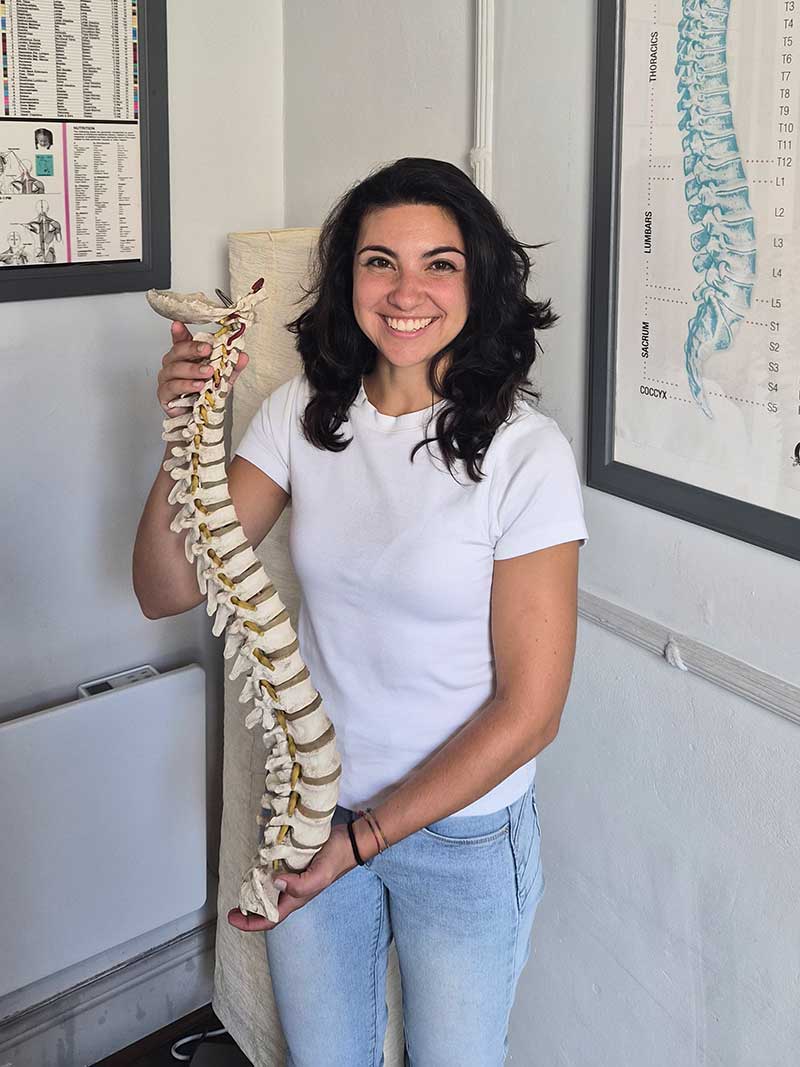
LAURA CASSOLA
Chiropractor
@Chiropractic First Dublin
View Laura's Full Profile here
MARINA AURICCHIO
Chiropractor
@Chiropractic First Dublin
Marina takes a gentle, patient-focused approach to care. She uses a range of techniques, including low-force and manual chiropractic adjustments, pelvic blocking, soft tissue therapy and muscle release techniques. She is also certified to treat paediatric patients and patients during pregnancy.
View Marina’s Profile here

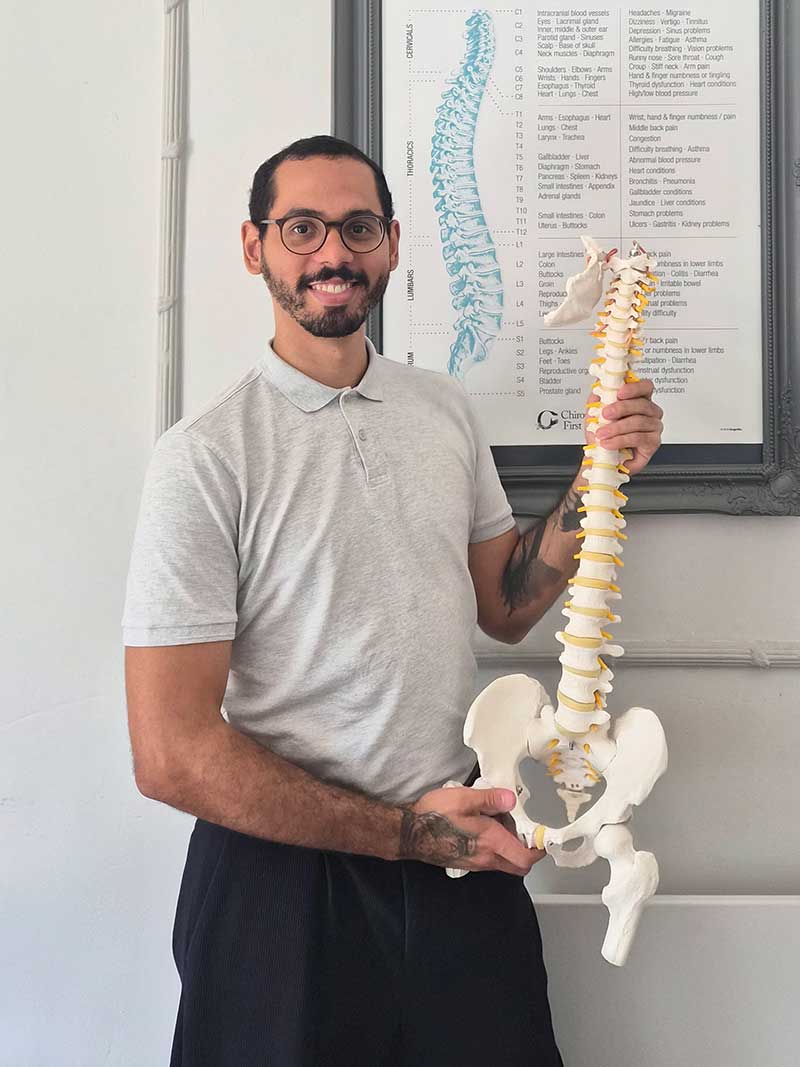
JOÃO VITOR DO AMARAL
Chiropractor
@Chiropractic First Dublin
João combines chiropractic care with muscle release techniques and works with methods including SOT, Activator Methods and Kinesio Taping. His approach can also include stretches and exercises alongside chiropractic care.
View João’s Full Profile here
SLAVA
Massage Therapist
@Chiropractic First Dublin
Slava’s approach focuses on movement and well-being. He places importance on listening to patients and helping them support their well-being through massage therapy and movement-focused care.
View Slava’s Profile here

WHAT TO EXPECT AT YOUR FIRST CHIROPRACTIC APPOINTMENT
Consultation and health history
Your appointment begins with a discussion about the symptoms and how they affect your usual routine. Your chiropractor may ask about:
- where you feel pain, stiffness, or altered sensation
- when the problem first appeared
- whether it followed an injury or developed gradually
- movements, positions, or tasks that aggravate it
- anything that temporarily eases the symptoms
- previous injuries, surgery, or health conditions
- medication and other relevant medical information
- your work and driving routine
- household, gardening, or caring responsibilities
- exercise and recreational activities
This provides context for the examination and helps identify whether additional testing or medical review may be required.
Physical examination
Your physical examination is selected according to the symptoms reported during the consultation. It may involve:
- observing posture and general movement
- checking movement in the spine and relevant joints
- palpating selected muscles and joints
- assessing movements that reproduce discomfort
- comparing mobility, strength, or control between areas
- observing how you bend, turn, stand, reach, or walk
The examination is not a fixed routine. Only tests that provide useful information about your individual symptoms should be included.
Orthopaedic and neurological testing
Further checks may be appropriate when symptoms include radiating pain, tingling, numbness, weakness, or restricted movement.
These checks may include:
- reflex testing
- muscle-strength assessment
- sensation testing
- signs of possible nerve irritation
- specific orthopaedic tests
- screening for symptoms that require medical attention
If your symptoms or examination findings suggest that GP assessment, imaging, physiotherapy, or another service would be more suitable, your chiropractor will discuss this with you.
Explanation and informed consent
Once the examination has been completed, your chiropractor will explain:
- what the findings suggest
- which factors may be contributing
- whether chiropractic care appears suitable
- which management options may be considered
- possible risks or limitations
- what changes would be used to measure progress
- when further investigation or referral may be needed
You will have an opportunity to ask questions. Treatment only begins after you understand the recommendation and provide informed consent.
Chiropractic Assessment and Treatment for Kill O’ The Grange Patients
COMMON REASONS KILL O’ THE GRANGE PATIENTS REQUEST AN ASSESSMENT
Back pain and stiffness
Lower-back pain can interfere with lifting, gardening, household maintenance, caring responsibilities, walking, and getting comfortable after sitting.
Some people notice symptoms while bending or carrying. Others experience stiffness after driving, desk work, or resting for an extended period. The assessment considers when the discomfort appears and whether nearby joints, muscle tension, movement habits, or daily demands may be contributing.
Recommendations are based on the examination rather than the painful area alone. Advice can also be adapted to the lifting, bending, and carrying tasks you regularly perform.
Neck pain and recurring headaches
Neck stiffness can make checking traffic, working at a computer, sleeping, or turning during everyday tasks uncomfortable. Tension may also extend into the shoulders or upper back.
Some headaches appear to begin around the neck, but headaches can have many causes. Assessment may consider neck movement, muscular tension, shoulder mobility, screen use, driving habits, and whether medical review is required.
New, severe, unusual, or worsening headaches should be medically assessed. Chiropractic treatment is only considered when the symptoms and findings indicate that it may be appropriate.
Sciatica-type symptoms
Symptoms described as sciatica can include pain, tingling, numbness, or discomfort extending from the lower back into the hip, leg, or foot.
A sciatica chiropractor may assess spinal and hip movement alongside reflexes, muscle strength, sensation, and activities that reproduce the symptoms.
These symptoms can have several possible causes. Assessment determines whether chiropractic care may be suitable or whether further medical investigation is required.
Posture-related strain
Desk work, driving, phone use, and staying in one position for extended periods can contribute to neck, shoulder, hip, or lower-back discomfort.
Posture is not simply about maintaining one ideal position. The amount of time spent sitting, the frequency with which you move, workstation setup, muscular endurance, and your normal workload can all be relevant.
A chiropractor for posture can assess these factors and provide practical guidance based on your routine.
Sports and activity-related discomfort
Running, field sports, cycling, gym training, and other recreational activities can place repeated demands on joints and muscles. Symptoms may develop after a specific incident, an increase in training, or repeated activity without sufficient recovery.
A sports chiropractor may assess mobility, muscular control, relevant joints, and the movements associated with your activity.
Recommendations may include manual care, mobility exercises, strengthening, and guidance about adjusting or gradually resuming activity. Injuries requiring imaging or specialist assessment will be referred appropriately.
WORKING AND LIVING IN KILL O’ THE GRANGE
Daily routines in Kill O’ The Grange can involve school runs, local driving, desk-based work, caring responsibilities, shopping, household maintenance, gardening, and regular walking.
Each activity places different demands on the body. Driving and desk work involve extended sitting, while shopping, childcare, and household tasks can require repeated lifting, reaching, carrying, or bending.
People completing school runs or regular local journeys may move repeatedly between sitting in a vehicle, walking, carrying bags, and helping children. Neck stiffness can become noticeable when checking traffic, while hip or lower-back discomfort may be more apparent when repeatedly getting in and out of a vehicle.
Gardening and home projects often involve kneeling, reaching, twisting, lifting, or remaining in one position. Symptoms may be influenced by the length of the task, the weight being handled, the working position, or a sudden increase in activity after a quieter period.
Regular walking, cycling, gym training, or field sports can place different loads on the body. Discomfort does not always mean an activity must be stopped completely. Assessment can help determine whether temporary modifications, gradual progression, mobility work, or strengthening may be appropriate.
Advice should reflect the tasks you actually perform. The aim is to help you understand how daily demands may relate to your symptoms and identify manageable changes that support more comfortable movement.
STRUCTURED CHIROPRACTIC CARE FOR KILL O’ THE GRANGE PATIENTS
CHIROPRACTIC TREATMENT APPROACHES
Joint and spinal techniques
Manual joint or spinal techniques may be considered where assessment identifies restricted or uncomfortable movement.
Joint chiropractic techniques can be adapted according to the area involved, examination findings, and your comfort. Back adjustments may also form part of care when clinically appropriate.
A chiropractic adjustment is not automatically included in every appointment. The proposed technique and available alternatives will be explained before you decide whether to proceed.
Gentle mobilisation
Mobilisation uses slower and more controlled joint movements. It may be recommended when a gentler approach is preferred or when manipulation is unsuitable.
The direction, range, and pressure used can be adjusted according to the area being treated, its sensitivity, and your examination findings.
Soft-tissue techniques
Muscles can become tense after repetitive movement, lifting, gardening, prolonged sitting, physical work, or changes in exercise.
Soft-tissue techniques may be used where muscular tension appears relevant. These techniques can be combined with mobility work, exercise, and changes to the activities contributing to the problem.
Exercise and movement guidance
Exercises may be recommended to support mobility, strength, coordination, or confidence with movement.
Depending on the assessment, your plan may include:
- mobility exercises for restricted areas
- strengthening exercises
- controlled movement practice
- exercises to improve balance or joint control
- gradual exposure to previously uncomfortable tasks
- guidance for returning to sport or exercise
- movements that can be completed between appointments
Exercises should be practical and relevant to your normal routine. They can be adjusted as your movement and symptoms change.
Posture and activity advice
Advice may consider how you work, drive, lift, carry, garden, exercise, and complete household tasks.
Recommendations could include:
- changing position more regularly
- adapting your desk or screen setup
- breaking longer tasks into manageable periods
- adjusting lifting or carrying technique
- varying repeated movements
- pacing gardening or home-maintenance tasks
- managing changes in exercise or training load
- introducing recovery time between demanding activities
The purpose is to identify achievable changes rather than expecting you to avoid every activity connected with your symptoms.
Ongoing review
Your progress will be reviewed throughout care. This may include changes in discomfort, joint movement, daily function, sleep, and your ability to perform work, household, caring, or recreational activities.
There is no standard number of visits. Appointment frequency depends on your symptoms, examination findings, goals, preferences, and response.
If your symptoms are not changing as expected, the care plan may be modified, paused, or discontinued. Further medical investigation or referral may also be recommended.
CLINIC LOCATION
Chiropractic First Dublin does not operate a separate clinic in Kill O’ The Grange. Patients attend our established Dublin 7 clinic for all appointments.
Clinic address:
8 Blessington Street
Dublin 7
D07 E6EP
Consultations, examinations, treatment, and progress reviews all take place at this address.
The service is entirely clinic-based. We do not provide chiropractic appointments in homes, hotels, offices, or other workplaces in Kill O’ The Grange.
FREQUENTLY ASKED QUESTIONS
Where do Kill O’ The Grange patients attend chiropractic appointments?
Patients attend Chiropractic First Dublin at 8 Blessington Street, Dublin 7, D07 E6EP. There is no separate Chiropractic First Dublin branch in Kill O’ The Grange.
What happens during my first chiropractic appointment?
Your first appointment includes a discussion of your symptoms, medical history, and daily activities. A relevant physical examination follows, with orthopaedic or neurological testing where indicated. The findings and available options are explained before you decide whether to proceed.
Can I book a chiropractic assessment for back pain?
Yes. Back pain and stiffness can be assessed to determine what may be contributing and whether chiropractic care appears appropriate. The examination may consider spinal movement, nearby joints, muscles, daily activities, and possible nerve-related symptoms.
Can a chiropractor assess sciatica-type symptoms?
Yes. Pain, tingling, numbness, or discomfort extending into the leg can be assessed. Neurological testing or referral may be required because these symptoms can have several possible causes.
Is treatment always provided during the first appointment?
No. Treatment depends on your history, examination findings, preferences, and whether chiropractic care appears suitable. Medical review, imaging, or referral may occasionally be recommended before treatment begins.
Does Chiropractic First Dublin provide home visits in Kill O’ The Grange?
No. Chiropractic First Dublin does not provide mobile, home, hotel, office, or workplace appointments. Patients attend the clinic in Dublin 7.
Do I need a GP referral to request an appointment?
A GP referral is not generally required to request a chiropractic appointment. However, your chiropractor may recommend GP assessment or another referral if your symptoms require medical investigation or fall outside the appropriate scope of chiropractic care.
BOOK A CHIROPRACTIC ASSESSMENT IN KILL O’ THE GRANGE
If you live or work in Kill O’ The Grange and ongoing pain or stiffness is affecting work, driving, walking, exercise, household responsibilities, caring tasks, or sleep, you can arrange an initial consultation.
You will receive a structured assessment and a clear explanation of the findings. Any recommended care will be discussed with you and based on your individual clinical needs.
SEND A MESSAGE
Do you have a question about our services? Fill in this form and we’ll get back to you as fast as possible.
Alternatively, use our online chat or whatsapp.