
Taking care of your back since 1998
Chiropractor Dún Laoghaire Dublin
(ASSESSMENT-LED CARE FOR DÚN LAOGHAIRE RESIDENTS)
Back pain, neck stiffness, joint discomfort, and recurring muscular tension can make DART journeys, town-centre work, shopping, pier walks, exercise, and sleep more difficult. People from Dún Laoghaire may request an assessment when symptoms no longer settle, repeatedly return, or begin to change how they move.
Chiropractic First Dublin provides clinic-based care for patients travelling from Dún Laoghaire to 8 Blessington Street, Dublin 7. Your symptoms, health history, movement, and relevant clinical findings are evaluated before any chiropractic treatment is recommended.
PROFESSIONAL CHIROPRACTIC CARE FOR DÚN LAOGHAIRE RESIDENTS
Pain and stiffness do not always follow one identifiable event. Symptoms can emerge after extended desk work, repeated standing, carrying bags, manual tasks, increased walking, changes in exercise, or a combination of everyday demands.
People from Dún Laoghaire may arrange an assessment for:
- lower-back discomfort during sitting, standing, or changing position
- neck and upper-back stiffness following screen work or commuting
- difficulty turning the head comfortably while driving or cycling
- shoulder restriction affecting reaching, lifting, or exercise
- headaches that appear to begin around the neck
- hip, knee, or ankle discomfort during longer walks
- pain, tingling, or altered sensation extending into an arm or leg
- recurring muscular tension after work, training, or household tasks
The area in which pain is felt may not reveal every structure or movement involved. Examination helps determine whether joint movement, muscle function, nerve sensitivity, physical load, or another clinical factor may be relevant.
Symptoms running from the lower back towards the hip, thigh, lower leg, or foot may require assessment by a sciatica chiropractor. Neurological checks may be included, and referral will be recommended if the presentation requires medical investigation.
OUR CLINIC
CONTACT DETAILS:
Phone: (01) 830 6188
Mobile: 086 0881483
Email: info@chiropracticfirstdublin.ie
OPENING HOURS:
Mon – Fri: 9am – 7pm
Sat: 10am – 2pm
Sun: Closed
LOCATION:
8 Blessington St, Dublin, D07 E6EP
CONTACT US
Please fill in this form with your query and we will get in touch as fast as possible.
CHIROPRACTIC FIRST DUBLIN REVIEWS
We also have reviews on other platforms such as Whatclinic, Trustpilot, Yelp and Facebook!
If you want to leave us a Google Review, click on this link:
OUR TEAM
Our team brings together chiropractors and massage therapy professionals with different backgrounds, techniques and areas of experience. We take an individual approach to care, with each practitioner bringing their own skills and perspective to support the needs of our patients.
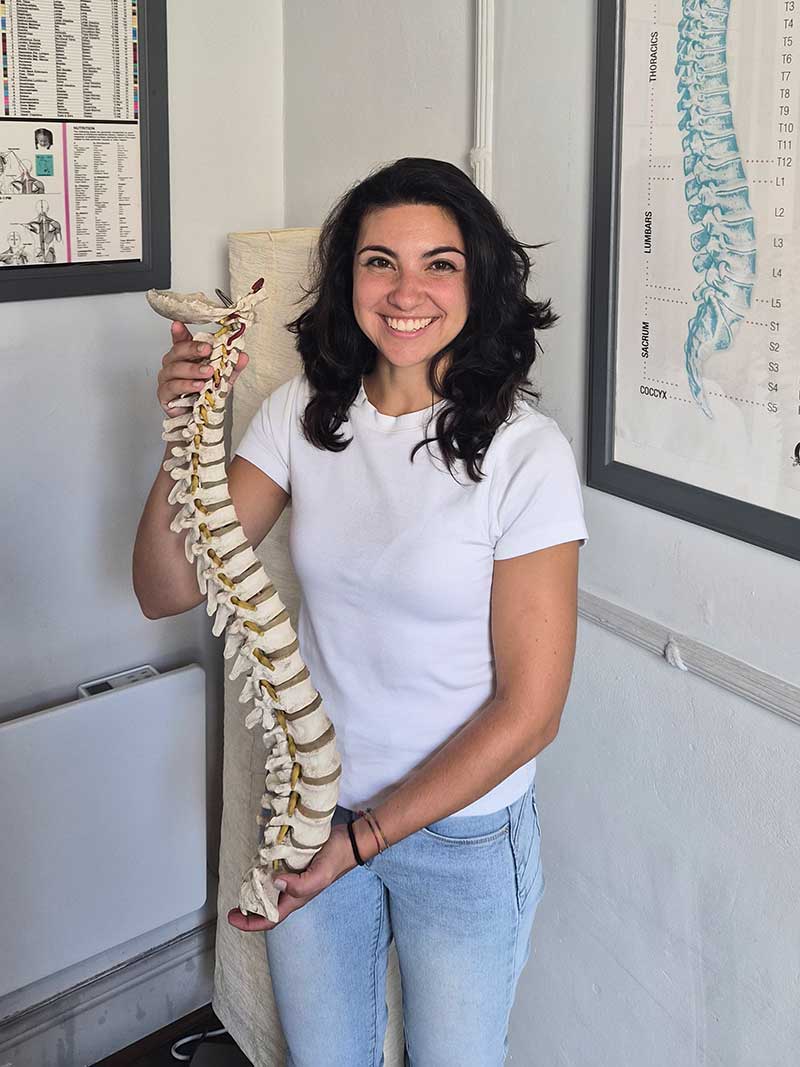
LAURA CASSOLA
Chiropractor
@Chiropractic First Dublin
View Laura's Full Profile here
MARINA AURICCHIO
Chiropractor
@Chiropractic First Dublin
Marina takes a gentle, patient-focused approach to care. She uses a range of techniques, including low-force and manual chiropractic adjustments, pelvic blocking, soft tissue therapy and muscle release techniques. She is also certified to treat paediatric patients and patients during pregnancy.
View Marina’s Profile here

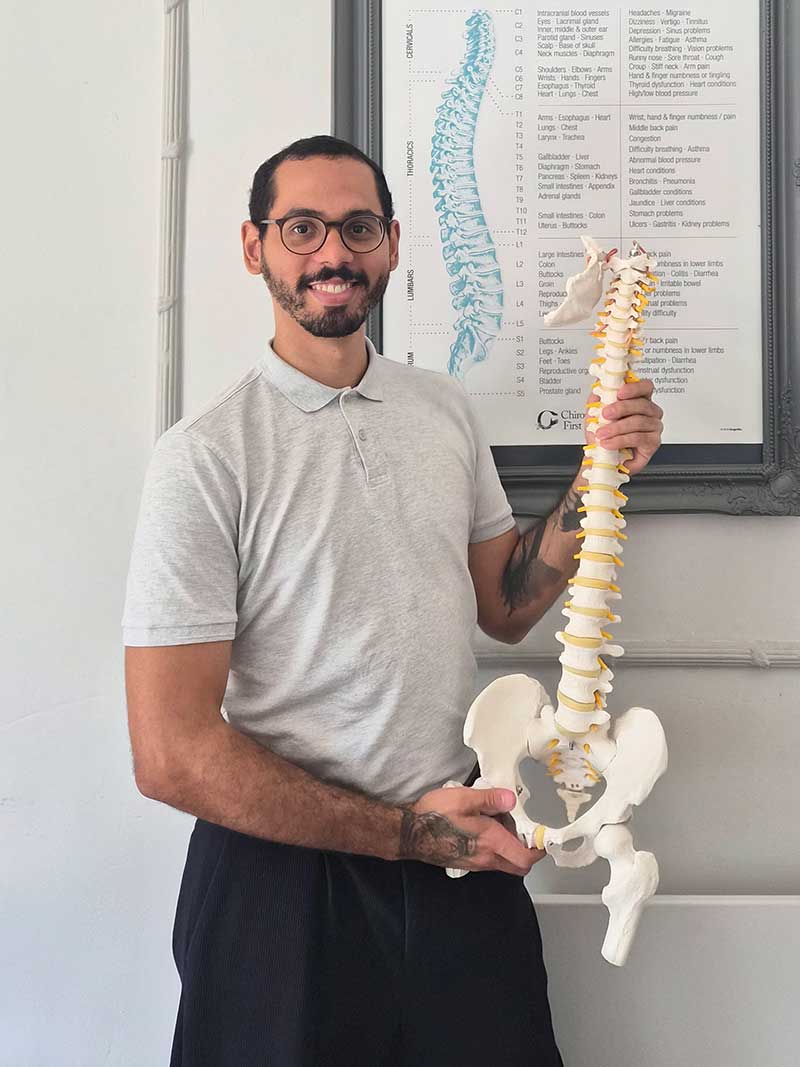
JOÃO VITOR DO AMARAL
Chiropractor
@Chiropractic First Dublin
João combines chiropractic care with muscle release techniques and works with methods including SOT, Activator Methods and Kinesio Taping. His approach can also include stretches and exercises alongside chiropractic care.
View João’s Full Profile here
SLAVA
Massage Therapist
@Chiropractic First Dublin
Slava’s approach focuses on movement and well-being. He places importance on listening to patients and helping them support their well-being through massage therapy and movement-focused care.
View Slava’s Profile here
WHAT TO EXPECT AT YOUR FIRST CHIROPRACTIC APPOINTMENT
Consultation and case history
The consultation establishes a clear timeline and considers how the symptoms affect your normal activities. You may be asked about:
- the location and nature of the discomfort
- when it first appeared and how it has changed
- positions or activities that increase or reduce the symptoms
- changes in work, commuting, exercise, or daily routines
- previous episodes, injuries, operations, or treatment
- medical conditions and relevant family history
- medication and other health information
- the activities you want to perform more comfortably
Your answers guide the examination and help identify whether chiropractic assessment is appropriate.
Physical examination
Testing is selected according to your presentation rather than applied as a fixed routine. It may involve:
- observing posture during standing and movement
- measuring spinal or peripheral joint mobility
- examining relevant muscles and joints
- checking movements that reproduce or ease symptoms
- comparing strength, control, or mobility between sides
- observing walking, turning, bending, or balance
- assessing a relevant work, lifting, or exercise movement
Tests are stopped or modified when they are unsuitable or unnecessarily uncomfortable.
Orthopaedic and neurological testing
Depending on your symptoms, further examination may include:
- reflex testing
- assessment of muscle strength
- sensation checks
- tests for possible nerve irritation
- relevant orthopaedic procedures
- screening for signs requiring medical attention
If your presentation would be better assessed through imaging, GP review, physiotherapy, or another healthcare service, the reasons will be explained.
Explanation of findings and informed consent
Once the examination is complete, your chiropractor will discuss:
- what the findings support
- any uncertainty or limitations
- factors that may be influencing the symptoms
- whether chiropractic care appears appropriate
- suitable treatment and self-management options
- possible risks and alternatives
- how improvement or deterioration will be monitored
You can ask questions or decline any proposed technique. Treatment proceeds only after the recommendation has been understood and informed consent has been provided.
Chiropractic Assessment and Treatment for Dún Laoghaire Patients
COMMON REASONS DÚN LAOGHAIRE PATIENTS REQUEST AN ASSESSMENT
Dún Laoghaire combines a busy town centre with a railway station, waterfront, harbour, shops, offices, cultural facilities, and established residential areas. A single day can involve several different physical demands.
DART commuters may walk to the station, carry a laptop or work bag, wait on the platform, sit or stand during the journey, and then spend much of the day at a workstation. Rather than treating “posture” as one fixed position, a chiropractor for posture can consider movement frequency, workstation arrangement, bag carrying, and tolerance to sitting or standing.
Movement between the waterfront, station, Marine Road, shopping areas, and surrounding residential streets may include slopes, steps, road crossings, and frequent changes of pace. Hip, knee, ankle, or lower-back symptoms can become more noticeable when these demands are repeated throughout the day.
The East Pier is commonly used for walking and provides an approximately two-kilometre return route. A firm, relatively consistent surface may feel different from a park path or ordinary street walking. If symptoms repeatedly appear after a certain time or distance, the assessment can consider walking tolerance, footwear, mobility, strength, and recent changes in activity.
Harbour-based activities may involve sailing, rowing, carrying equipment, balance, pulling movements, or repeated use of the shoulders and trunk. These activities are not automatically assumed to be the cause of pain. The examination considers when symptoms occur and whether technique, workload, recovery, or an unrelated condition may be contributing.
Cycling and walking along The Metals or other coastal routes can also involve sustained positions and repeated movement. People returning to activity after a break may need guidance on building distance or intensity gradually.
A sports chiropractor may assess symptoms related to running, cycling, swimming, rowing, sailing, gym training, field sports, or other exercise. Recommendations are based on the clinical findings and the demands of the activity.
WORKING AND LIVING IN DÚN LAOGHAIRE
Dún Laoghaire’s urban waterfront setting creates a different routine from smaller coastal towns. Residents may combine public transport, pedestrian journeys, shopping, office work, school activities, harbour recreation, and exercise within the same day.
Walking is often part of ordinary transport rather than a separate workout. A journey may include the station, town centre, harbour, People’s Park, the LexIcon, or nearby residential streets. Several shorter journeys can create a considerable total walking distance even when no individual walk feels particularly long.
The East Pier, harbour walls, and seafront provide accessible routes for regular walking. People may increase their distance quickly when the weather improves or when returning to exercise. Persistent discomfort should be assessed according to the individual’s health history and symptom pattern rather than attributed automatically to the route.
The Metals provides a shared pedestrian and cycling connection towards Glasthule, Sandycove, Glenageary, and Dalkey. Cyclists may notice symptoms associated with sustained positioning, while walkers may become aware of stiffness after increasing their normal pace or distance.
Local employment can involve very different physical requirements. Retail, hospitality, healthcare, maintenance, cultural services, and practical work may involve prolonged standing, carrying, bending, or reaching. Office and remote-working roles may involve extended screen use and fewer changes of position.
Family routines can include school journeys, shopping, pushing buggies, caring responsibilities, and carrying bags between different parts of the town. The cumulative effect of these tasks may be more relevant than one isolated movement.
Sailing, rowing, swimming, running, cycling, gym training, and other recreational activities each require different combinations of mobility, strength, coordination, and recovery. Advice is therefore adapted to the activity rather than based on a standard restriction list.
The objective of assessment is to understand how your actual routine relates to the symptoms and identify practical steps that can be incorporated into work, commuting, family life, and suitable exercise.
STRUCTURED CHIROPRACTIC CARE FOR DÚN LAOGHAIRE PATIENTS
CHIROPRACTIC TREATMENT APPROACHES
Treatment is selected after assessment and adapted to the individual. The painful area alone does not determine which techniques are suitable.
A management plan may include:
- mobilisation for restricted or sensitive joints
- manual techniques to support comfortable movement
- soft-tissue work where muscular tension is relevant
- mobility, strength, or movement-control exercises
- advice for desk work, commuting, and prolonged standing
- guidance on carrying, lifting, or repetitive tasks
- pacing recommendations for walking or exercise
- a home programme linked to the examination findings
Joint chiropractic techniques may be considered when a relevant joint restriction is identified. Back adjustments may form part of care when clinically justified, suitable for the patient, and accepted through informed consent.
A chiropractic adjustment is not required for every patient. Mobilisation, soft-tissue techniques, guided exercise, and activity advice may be used when manipulation is unsuitable or not preferred.
Progress is reviewed against agreed goals. Care can be changed, paused, discontinued, or followed by referral if the response is different from what was expected.
CLINIC LOCATION
Chiropractic First Dublin does not operate a separate clinic in Dún Laoghaire. Patients attend the established Dublin 7 clinic for every consultation, examination, and treatment appointment.
Clinic address:
8 Blessington Street
Dublin 7
D07 E6EP
All care is delivered at the clinic. We do not provide mobile appointments in homes, hotels, offices, sports facilities, marinas, or other workplaces in Dún Laoghaire.
FREQUENTLY ASKED QUESTIONS
Is there a Chiropractic First Dublin clinic in Dún Laoghaire?
No. Patients from Dún Laoghaire attend the clinic at 8 Blessington Street, Dublin 7. The Dún Laoghaire page describes who may request an assessment, but it does not represent a separate local clinic.
Which symptoms can be assessed?
Assessment may be suitable for back pain, neck stiffness, shoulder restriction, headaches that appear related to the neck, hip or leg discomfort, posture-related strain, and recurring movement difficulties. Suitability is determined from your history and examination.
Can discomfort related to DART commuting or office work be assessed?
Yes. Walking to the station, carrying bags, sitting or standing during the journey, and workstation demands can all be considered. Advice can then be fitted around your normal working day.
Can pain that develops during pier walking be assessed?
Yes. The assessment can consider symptom timing, walking distance, footwear, joint mobility, strength, balance, and recent changes in activity. The pier itself is not automatically assumed to be responsible.
Can shoulder symptoms associated with sailing, rowing, or swimming be assessed?
Yes. Relevant shoulder movement, strength, control, workload, and recovery can be examined. Referral may be recommended if the findings indicate an injury or condition requiring another form of care.
Will I have to receive an adjustment?
No. Recommendations depend on your examination findings and preferences. Mobilisation, soft-tissue techniques, exercise, ergonomic guidance, activity changes, or referral may be more appropriate.
What happens if chiropractic care is not suitable?
The findings will be explained, and you may be advised to contact your GP, seek physiotherapy, obtain imaging, or consult another appropriate healthcare professional.
How many visits are usually recommended?
There is no predetermined number. Recommendations are based on your symptoms, goals, clinical findings, and response to care. Progress is reviewed to avoid continuing appointments that are not providing an appropriate benefit.
Do you provide home or workplace visits in Dún Laoghaire?
No. Chiropractic First Dublin does not provide mobile, home, hotel, marina, sports facility, office, or workplace appointments. Patients attend the Dublin 7 clinic.
BOOK A CHIROPRACTIC ASSESSMENT IN DÚN LAOGHAIRE
If you live or work in Dún Laoghaire and continuing pain or stiffness is affecting commuting, walking, work, harbour activities, exercise, family responsibilities, or sleep, you can arrange an initial consultation.
Your appointment will include a structured assessment and a clear discussion of the findings. Any proposed treatment will be based on your clinical needs and discussed with you before care begins.
SEND A MESSAGE
Do you have a question about our services? Fill in this form and we’ll get back to you as fast as possible.
Alternatively, use our online chat or whatsapp.