
Taking care of your back since 1998
Chiropractor St. Margaret’s Dublin
(ASSESSMENT-LED CARE FOR ST. MARGARET’S RESIDENTS)
Back pain, neck stiffness, joint discomfort, and recurring muscular tension can make driving, shift work, lifting, gardening, and everyday household tasks more difficult. People from St. Margaret’s may request an assessment when symptoms persist, repeatedly return, or begin to restrict normal movement.
Chiropractic First Dublin provides clinic-based care for patients travelling from St. Margaret’s to 8 Blessington Street, Dublin 7. Your medical history, symptoms, daily demands, movement, and relevant clinical findings are reviewed before any chiropractic treatment is recommended.
PROFESSIONAL CHIROPRACTIC CARE FOR ST. MARGARET’S RESIDENTS
Musculoskeletal discomfort can begin after a specific injury, but it can also build gradually through repeated lifting, long periods of driving, shift work, physical employment, gardening, sport, or remaining in one position for extended periods.
Chiropractic care at our clinic is assessment-led. An appointment begins by identifying how your symptoms developed, which activities affect them, and whether joint movement, muscular tension, nerve irritation, posture, or another factor may be involved.
Patients may request an assessment for:
- lower or middle back pain
- neck pain and restricted movement
- shoulder stiffness or discomfort
- headaches that appear linked with the neck
- hip, knee, or leg discomfort
- pain or tingling travelling into an arm or leg
- recurring stiffness after driving or sitting
- strain associated with lifting or physical work
- discomfort following sport or exercise
An adjustment is not automatically performed. Your chiropractor first determines whether chiropractic care is suitable and which management options are appropriate for your symptoms, health history, preferences, and goals.
Where findings suggest that imaging, GP assessment, physiotherapy, or another healthcare service may be more appropriate, this will be explained and referral recommended.
OUR CLINIC
CONTACT DETAILS:
Phone: (01) 830 6188
Mobile: 086 0881483
Email: info@chiropracticfirstdublin.ie
OPENING HOURS:
Mon – Fri: 9am – 7pm
Sat: 10am – 2pm
Sun: Closed
LOCATION:
8 Blessington St, Dublin, D07 E6EP
CONTACT US
Please fill in this form with your query and we will get in touch as fast as possible.
CHIROPRACTIC FIRST DUBLIN REVIEWS
We also have reviews on other platforms such as Whatclinic, Trustpilot, Yelp and Facebook!
If you want to leave us a Google Review, click on this link:
OUR TEAM
Our team brings together chiropractors and massage therapy professionals with different backgrounds, techniques and areas of experience. We take an individual approach to care, with each practitioner bringing their own skills and perspective to support the needs of our patients.
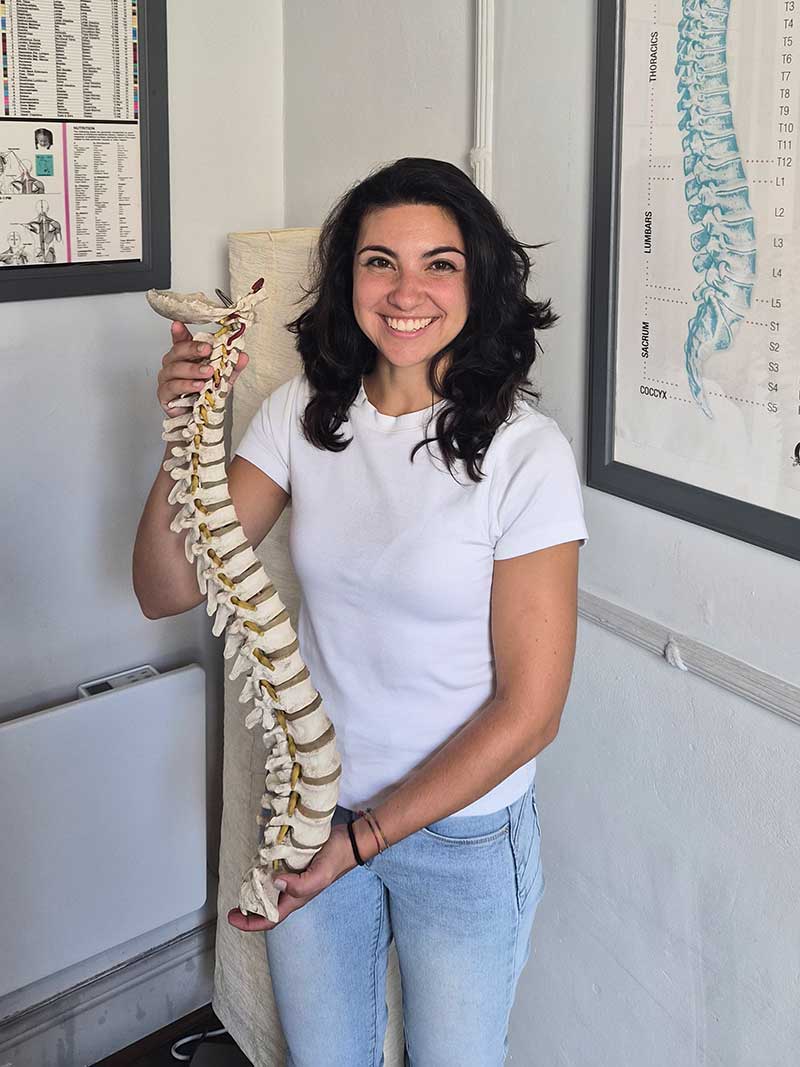
LAURA CASSOLA
Chiropractor
@Chiropractic First Dublin
View Laura's Full Profile here
MARINA AURICCHIO
Chiropractor
@Chiropractic First Dublin
Marina takes a gentle, patient-focused approach to care. She uses a range of techniques, including low-force and manual chiropractic adjustments, pelvic blocking, soft tissue therapy and muscle release techniques. She is also certified to treat paediatric patients and patients during pregnancy.
View Marina’s Profile here

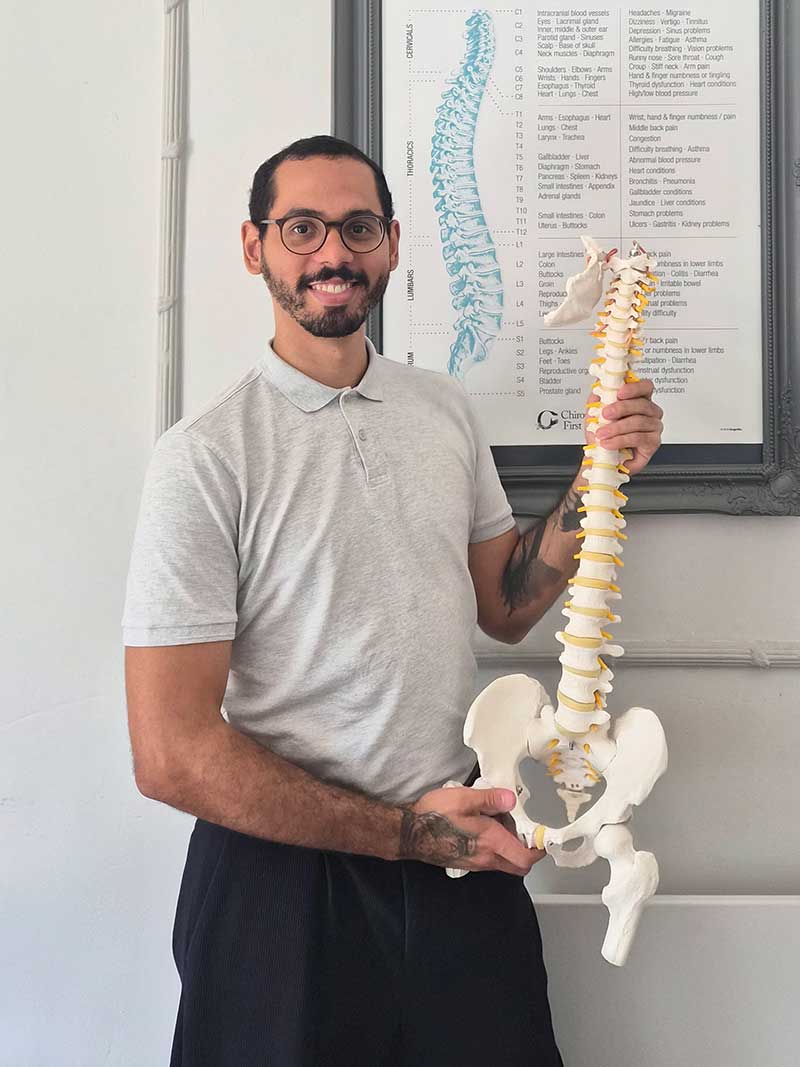
JOÃO VITOR DO AMARAL
Chiropractor
@Chiropractic First Dublin
João combines chiropractic care with muscle release techniques and works with methods including SOT, Activator Methods and Kinesio Taping. His approach can also include stretches and exercises alongside chiropractic care.
View João’s Full Profile here
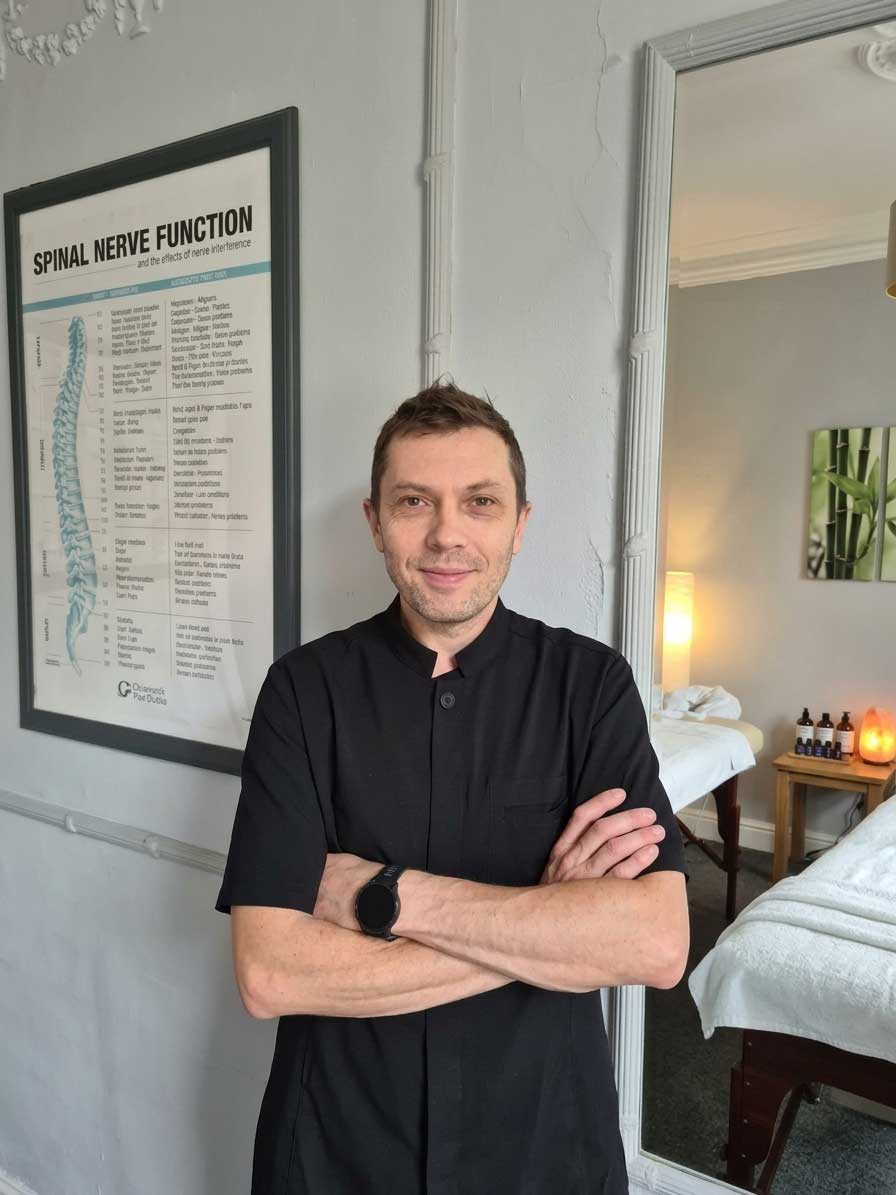
SLAVA
Massage Therapist
@Chiropractic First Dublin
Slava’s approach focuses on movement and well-being. He places importance on listening to patients and helping them support their well-being through massage therapy and movement-focused care.
View Slava’s Profile here
WHAT TO EXPECT AT YOUR FIRST CHIROPRACTIC APPOINTMENT
Your first appointment is designed to develop a clear clinical picture before treatment is considered.
Consultation and case history
Your chiropractor will ask about:
- where you feel pain or stiffness
- when the symptoms started
- whether they began suddenly or gradually
- movements or activities that aggravate them
- anything that provides temporary relief
- previous injuries, surgery, or medical conditions
- medication and relevant health information
- your work, driving, exercise, and household routines
- what you would like to achieve through care
This discussion helps identify possible contributing factors and any symptoms that may require medical attention.
Physical examination
The physical examination is selected according to your individual presentation and may include:
- observing posture and movement
- checking spinal and joint range of motion
- palpating relevant muscles and joints
- assessing movements that reproduce discomfort
- comparing mobility or control between different areas
- observing how you bend, turn, stand, or walk
Only clinically relevant checks are performed. The purpose is to gather enough information to understand the pattern of your symptoms.
Orthopaedic and neurological testing
Where appropriate, additional checks may include:
- reflexes
- muscle strength
- sensation
- signs of possible nerve irritation
- specific orthopaedic tests
- screening for symptoms requiring medical referral
These checks can be particularly important when symptoms include weakness, numbness, tingling, or pain travelling into an arm or leg.
Explanation of findings and informed consent
Following the assessment, your chiropractor will explain:
- what the findings suggest
- which factors may be contributing
- whether chiropractic care appears suitable
- the available management options
- possible risks or limitations
- how your response can be monitored
You can ask questions before deciding whether to proceed. Treatment only begins once the recommendation has been explained and you have provided informed consent.
Chiropractic Assessment and Treatment for St. Margaret’s Patients
COMMON REASONS ST. MARGARET’S PATIENTS REQUEST AN ASSESSMENT
People experience musculoskeletal symptoms differently. Some notice discomfort after a particular movement or activity, while others develop stiffness gradually through repeated daily demands.
Common reasons for requesting an assessment include:
- lower back pain after driving or prolonged sitting
- discomfort during lifting, carrying, or bending
- neck and shoulder tension associated with computer work
- stiffness when turning the head while driving
- headaches that seem to begin around the neck
- hip or knee discomfort after prolonged standing
- recurring muscular tightness after physical work
- pain following an increase in exercise or activity
- tingling or radiating discomfort extending into a limb
Symptoms extending from the lower back into the buttock, hip, leg, or foot require careful assessment because they may have several possible causes. A sciatica chiropractor can examine whether lower-back movement, muscular tension, or possible nerve irritation may be contributing.
Sudden weakness, significant loss of sensation, changes in bladder or bowel control, severe unexplained pain, or symptoms following major trauma require prompt medical attention rather than routine chiropractic treatment.
WORKING AND LIVING IN ST. MARGARET’S
St. Margaret’s combines a rural village environment with regular road travel and proximity to airport, transport, logistics, trade, and service employment. Depending on the individual’s routine, a normal day may involve driving, early or late shifts, prolonged standing, lifting, warehouse tasks, property maintenance, gardening, or computer-based work.
Long periods behind the wheel can be associated with stiff hips, lower-back discomfort, and neck tension. Frequently checking mirrors, reversing, or looking over the shoulder can also make restricted neck movement more noticeable.
Where driving position, computer use, or repeated sitting appears relevant, a chiropractor for posture can assess movement habits, workstation setup, and areas of muscular strain. Advice may include seat adjustments, movement breaks, changes to screen position, or exercises selected according to the assessment.
Physical jobs can involve repeated bending, reaching, carrying, pushing, or standing on firm surfaces. Rather than assuming that work is the sole cause, the assessment considers how workload, recovery time, movement technique, previous injury, and general activity may interact.
Gardening, household maintenance, community activities, walking, gym training, and field sports can place different demands on the body. People experiencing activity-related discomfort may be assessed by a sports chiropractor to determine whether training load, mobility, muscular control, or recovery habits may be relevant.
Recommendations should be practical for your actual routine. The aim is to identify manageable changes that may support more comfortable movement without requiring unrealistic alterations to work or daily life.
STRUCTURED CHIROPRACTIC CARE FOR ST. MARGARET’S PATIENTS
CHIROPRACTIC TREATMENT APPROACHES
Treatment recommendations are based on your assessment findings. There is no standard programme applied to every patient, and the techniques used can be modified according to your comfort and clinical needs.
Where appropriate, care may include:
- gentle mobilisation for stiff or sensitive joints
- manual techniques for restricted movement
- soft-tissue techniques for muscular tension
- mobility exercises
- strengthening and movement-control exercises
- guidance on bending, lifting, or carrying
- advice for driving and prolonged sitting
- workstation and posture recommendations
- temporary changes to workload or exercise
- home exercises based on identified needs
Back adjustments may be considered when assessment identifies relevant stiffness or restricted spinal movement. However, they are only one possible component of care and are not suitable or necessary for every patient.
Joint chiropractic techniques may also be considered where a shoulder, hip, knee, or another joint is contributing to restricted movement. The wider assessment considers how the affected area works with the surrounding muscles and joints.
If manipulation is unsuitable or not preferred, a gentler plan may involve mobilisation, soft-tissue techniques, guided movement, rehabilitation exercises, and practical activity advice.
Progress is reviewed regularly. If symptoms do not respond as expected, the plan can be adjusted, discontinued, or followed by referral for further assessment.
CLINIC LOCATION
Chiropractic First Dublin does not operate a separate clinic in St. Margaret’s. Patients travel to our established Dublin 7 clinic for consultations, examinations, and treatment.
Clinic address:
8 Blessington Street
Dublin 7
D07 E6EP
All appointments take place at this address. Chiropractic First Dublin does not provide mobile chiropractic services or treatment in homes, hotels, offices, warehouses, or other workplaces in St. Margaret’s.
FREQUENTLY ASKED QUESTIONS
Is there a Chiropractic First Dublin clinic in St. Margaret’s?
No. Patients from St. Margaret’s attend Chiropractic First Dublin at 8 Blessington Street, Dublin 7. The consultation, physical examination, and any recommended treatment take place at this clinic.
What problems can a chiropractor assess?
An assessment may be appropriate for back pain, neck stiffness, shoulder restriction, headaches that appear linked with the neck, hip or leg discomfort, posture-related strain, and recurring movement problems. The assessment determines whether chiropractic care is suitable.
Does every patient receive a chiropractic adjustment?
No. Treatment depends on your medical history, symptoms, examination findings, preferences, and clinical needs. Your plan may instead involve mobilisation, soft-tissue techniques, exercise, movement guidance, or referral.
Can discomfort associated with driving or shift work be assessed?
Yes. Your chiropractor can consider whether prolonged sitting, repeated head movement, standing, lifting, workload, recovery habits, or workstation factors may be contributing. Advice can then be adapted to your normal routine.
Can pain or tingling travelling into the leg be assessed?
Yes, but radiating symptoms require careful evaluation because they can have different causes. The examination may include neurological and orthopaedic checks. Medical referral will be recommended if further investigation is needed.
Can lifting or physically demanding work contribute to symptoms?
Repeated lifting, carrying, pushing, pulling, or bending may contribute to muscular and joint strain. The assessment considers how you perform these tasks, the frequency and load involved, previous injuries, and whether changes in technique or pacing may help.
How many chiropractic appointments will I need?
There is no standard number of appointments. Recommendations depend on your symptoms, examination findings, goals, and response to care. Progress is reviewed so that treatment can be modified or ended when appropriate.
BOOK A CHIROPRACTIC ASSESSMENT IN ST. MARGARET’S
If you live or work in St. Margaret’s and ongoing pain or stiffness is interfering with driving, work, exercise, household responsibilities, or sleep, you can arrange an initial consultation at Chiropractic First Dublin.
Your appointment will include a structured assessment and a clear explanation of the findings. Any recommended treatment will be discussed with you and based on your individual clinical needs.
SEND A MESSAGE
Do you have a question about our services? Fill in this form and we’ll get back to you as fast as possible.
Alternatively, use our online chat or whatsapp.