
Taking care of your back since 1998
Chiropractor Skerries Dublin
(ASSESSMENT-LED CARE FOR SKERRIES RESIDENTS)
Back pain, neck stiffness, joint discomfort, and recurring muscular tension can affect commuting, work, family routines, coastal walking, exercise, and sleep. People from Skerries may request an assessment when symptoms persist, repeatedly return, or begin to restrict comfortable movement.
Chiropractic First Dublin provides clinic-based care for patients travelling from Skerries to 8 Blessington Street, Dublin 7. Your symptoms, medical history, movement, and relevant clinical findings are assessed before any chiropractic treatment is recommended.
PROFESSIONAL CHIROPRACTIC CARE FOR SKERRIES RESIDENTS
Musculoskeletal symptoms may follow an identifiable injury, but they can also develop gradually through rail or road commuting, desk work, repeated lifting, prolonged standing, household responsibilities, sport, or changes in normal activity.
People from Skerries may request an assessment for:
- lower-back pain during sitting, bending, lifting, or standing
- neck stiffness following train journeys, driving, or computer work
- shoulder discomfort or restricted arm movement
- headaches that appear to begin around the neck
- hip, knee, or ankle discomfort affecting walking
- muscular tension following work, sport, or physical tasks
- pain, tingling, or altered sensation extending into an arm or leg
- recurring stiffness after sitting, resting, or travelling
The location of pain does not always identify every joint, muscle, nerve, or movement pattern involved. A structured examination helps determine whether joint restriction, muscular tension, nerve irritation, posture, activity load, or another factor may be contributing.
When symptoms extend from the lower back through the hip and into the leg or foot, assessment by a sciatica chiropractor may include movement and neurological checks. Medical referral will be recommended when symptoms require investigation outside the appropriate scope of chiropractic care.
OUR CLINIC
CONTACT DETAILS:
Phone: (01) 830 6188
Mobile: 086 0881483
Email: info@chiropracticfirstdublin.ie
OPENING HOURS:
Mon – Fri: 9am – 7pm
Sat: 10am – 2pm
Sun: Closed
LOCATION:
8 Blessington St, Dublin, D07 E6EP
CONTACT US
Please fill in this form with your query and we will get in touch as fast as possible.
CHIROPRACTIC FIRST DUBLIN REVIEWS
We also have reviews on other platforms such as Whatclinic, Trustpilot, Yelp and Facebook!
If you want to leave us a Google Review, click on this link:
OUR TEAM
Our team brings together chiropractors and massage therapy professionals with different backgrounds, techniques and areas of experience. We take an individual approach to care, with each practitioner bringing their own skills and perspective to support the needs of our patients.
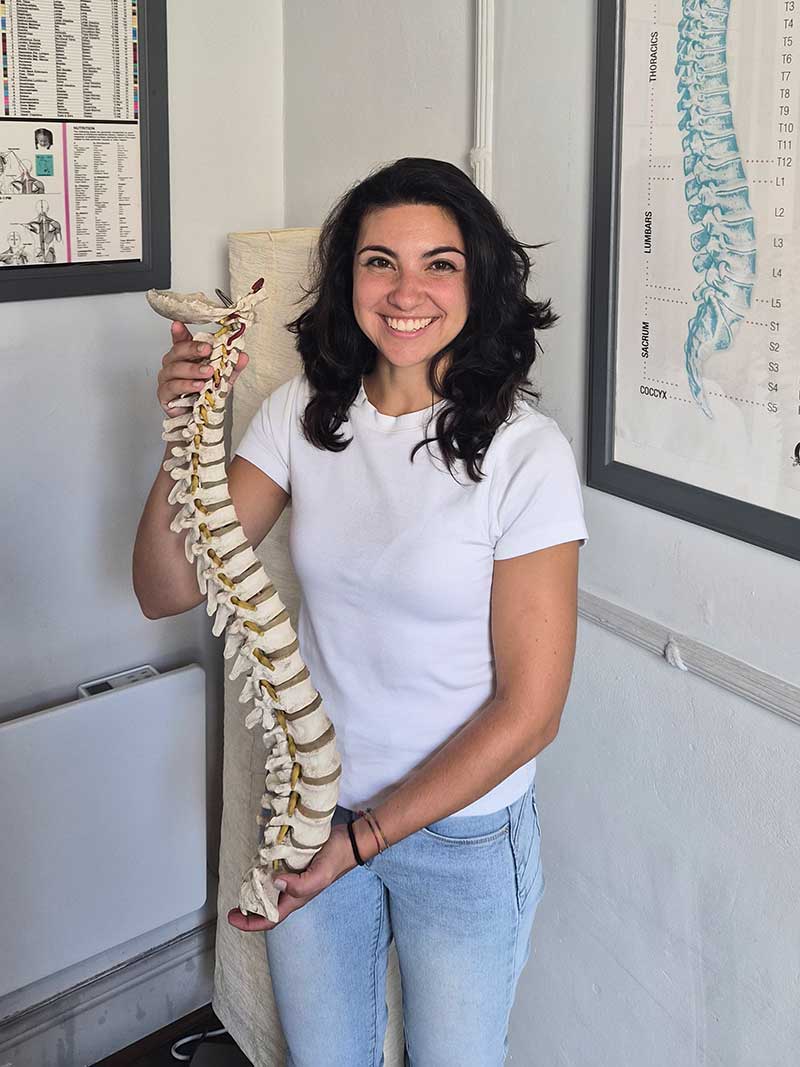
LAURA CASSOLA
Chiropractor
@Chiropractic First Dublin
View Laura's Full Profile here
MARINA AURICCHIO
Chiropractor
@Chiropractic First Dublin
Marina takes a gentle, patient-focused approach to care. She uses a range of techniques, including low-force and manual chiropractic adjustments, pelvic blocking, soft tissue therapy and muscle release techniques. She is also certified to treat paediatric patients and patients during pregnancy.
View Marina’s Profile here

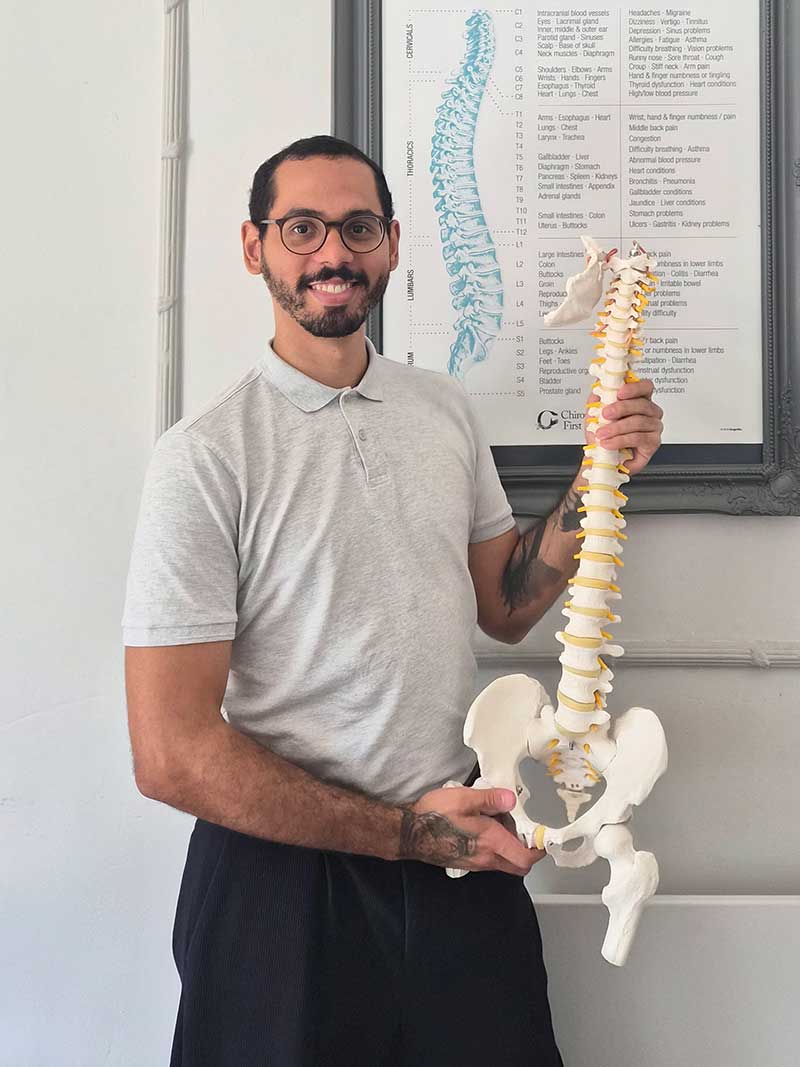
JOÃO VITOR DO AMARAL
Chiropractor
@Chiropractic First Dublin
João combines chiropractic care with muscle release techniques and works with methods including SOT, Activator Methods and Kinesio Taping. His approach can also include stretches and exercises alongside chiropractic care.
View João’s Full Profile here
SLAVA
Massage Therapist
@Chiropractic First Dublin
Slava’s approach focuses on movement and well-being. He places importance on listening to patients and helping them support their well-being through massage therapy and movement-focused care.
View Slava’s Profile here
WHAT TO EXPECT AT YOUR FIRST CHIROPRACTIC APPOINTMENT
Consultation and case history
Your appointment begins with a detailed discussion about:
- where you experience pain, stiffness, or altered sensation
- when the symptoms began
- whether they developed suddenly or gradually
- movements, positions, or activities that aggravate them
- factors that provide temporary relief
- previous injuries, surgery, or medical conditions
- medication and other relevant health information
- your normal work, commuting, home, and exercise routines
This conversation provides the clinical context needed to select an appropriate examination. It also helps identify symptoms that may require medical review, imaging, or referral to another healthcare professional.
Physical examination
The examination is adapted to your individual presentation and may include:
- observing posture and general movement
- checking spinal and joint range of motion
- palpating relevant muscles and joints
- assessing movements that reproduce discomfort
- comparing mobility, strength, or control
- observing how you bend, turn, stand, or walk
- checking how different positions affect your symptoms
Only relevant tests are selected. The purpose is to obtain the information required to understand your complaint rather than perform every available examination.
Orthopaedic and neurological testing
Where clinically indicated, additional checks may include:
- reflexes
- muscle strength
- sensation
- signs of possible nerve irritation
- specific orthopaedic tests
- screening for symptoms requiring urgent or specialist assessment
If the findings suggest that imaging, GP assessment, physiotherapy, or another healthcare service would be more appropriate, this will be discussed with you.
Explanation of findings and informed consent
After the examination, your chiropractor will explain:
- what the findings may indicate
- which factors appear relevant
- whether chiropractic care is suitable
- the available management options
- possible risks or limitations
- how progress can be monitored
You will have an opportunity to ask questions. Treatment only begins after you understand the recommendation and provide informed consent.
Chiropractic Assessment and Treatment for Skerries Patients
COMMON REASONS SKERRIES PATIENTS REQUEST AN ASSESSMENT
Daily routines in Skerries may combine rail or road commuting with desk-based work, family responsibilities, town-centre errands, coastal walking, sport, and other recreational activities. These demands can influence symptoms in different ways.
A commuting day may involve walking to the railway station, carrying a work bag, sitting or standing during the journey, working at a computer, and repeating the journey home. Drivers may also spend extended periods sitting with limited opportunities to change position. Where these factors appear relevant, a chiropractor for posture can assess sitting habits, workstation setup, movement tolerance, and daily routines.
Skerries has extensive opportunities for walking around the town and coastline. South Strand, North Beach, Red Island, and the adjoining coastal routes involve a mixture of paved surfaces, sand, gradients, and changing ground conditions. Discomfort during these activities may be influenced by footwear, recent increases in walking distance, movement restriction, strength, balance, or an existing complaint.
Walking on sand generally requires more muscular effort and control than walking on a firm, level surface. This does not mean that beach walking is necessarily responsible for pain. An assessment considers how symptoms behave before, during, and after the activity and whether other demands may also be relevant.
Coastal recreation can involve swimming, sailing, rowing, carrying equipment, repeated shoulder movement, balance, or getting into and out of the water. If symptoms develop during these activities, the examination can consider the joints, muscles, mobility, and movement patterns involved without assuming that one activity is the sole cause.
Running, cycling, Gaelic games, football, gym training, and other exercise can place different demands on the body. Sudden changes in distance, intensity, equipment, technique, or recovery may occasionally be followed by stiffness or discomfort. A sports chiropractor may assess the relevant movement and activity factors.
Work and household routines can also involve prolonged standing, repeated reaching, lifting deliveries, carrying children, gardening, maintenance, or moving equipment. Recommendations should reflect the tasks you actually perform and provide realistic ways to modify load, pacing, or technique where appropriate.
The objective is not to discourage normal movement or suitable exercise. It is to understand which factors may be contributing and provide practical guidance that supports more comfortable participation.
WORKING AND LIVING IN SKERRIES
Skerries is a coastal town with a railway station, harbour, beaches, established residential areas, shops, schools, sporting activity, and community amenities. Daily life can therefore combine commuting with substantial amounts of walking, family activity, work, and recreation.
For rail commuters, the physical demands of the day may begin before reaching the workplace. Walking to the station, carrying bags, waiting, sitting or standing on the train, and then working at a desk can involve repeated positions and limited variation in movement.
People who work locally may encounter different demands. Retail, hospitality, care, construction, maintenance, trades, and other practical roles can involve prolonged standing, lifting, carrying, reaching, or repeated movement. Desk-based and home-working roles may instead involve extended sitting and sustained screen use.
Skerries North Beach adjoins the harbour area, while the coastal walkway continues around Red Island towards South Strand. Residents may use these routes for ordinary walking, dog walking, running, family outings, or recovery between periods of work. The distance, surface, pace, and frequency of these activities can all be considered during an assessment.
South Strand provides a long sandy beach and adjoining coastal walkway. Moving between the esplanade and sand changes the demands placed on the feet, ankles, knees, hips, and lower back. When discomfort appears consistently on one surface or after a particular distance, that pattern can provide useful information during the examination.
Skerries Mills and the wider walking routes through the town also encourage people to combine everyday journeys with recreational movement. A sudden increase in distance or frequency may make an existing restriction more noticeable, although persistent symptoms should not automatically be attributed to walking itself.
Family routines can involve school journeys, shopping, pushing buggies, carrying bags, supervising children, gardening, and household maintenance. These combined tasks may be relevant when symptoms develop without one obvious injury.
People involved in coastal activities or organised sport may encounter repeated rotation, overhead movement, running, rapid changes of direction, balance demands, or equipment carrying. Assessment considers recent changes in workload, recovery, mobility, strength, and symptom behaviour.
Recommendations should fit your actual routine. Advice can therefore be adapted to commuting, local work, household responsibilities, coastal walking, water-based recreation, organised sport, and individual exercise.
STRUCTURED CHIROPRACTIC CARE FOR SKERRIES PATIENTS
CHIROPRACTIC TREATMENT APPROACHES
Treatment is not selected solely according to the location of symptoms. Recommendations depend on your health history, examination findings, comfort, goals, and response to care.
Where clinically appropriate, a management plan may include:
- mobilisation for stiff or sensitive joints
- manual techniques for restricted movement
- soft-tissue techniques for muscular tension
- mobility and strengthening exercises
- guidance on lifting, carrying, or repetitive tasks
- workstation and commuting advice
- changes to training or activity load
- home exercises based on identified needs
Joint chiropractic techniques may be considered when examination findings identify a relevant movement restriction. Back adjustments may also form part of care when suitable, clinically justified, and accepted by the patient.
Not every patient requires or wants a chiropractic adjustment. Gentler alternatives may include mobilisation, soft-tissue work, guided movement, rehabilitation exercises, or practical changes to daily activities.
Your response to care is reviewed. If symptoms do not improve as expected, the management plan may be modified, discontinued, or followed by referral for further assessment.
CLINIC LOCATION
Chiropractic First Dublin does not operate a separate clinic in Skerries. Patients travel to the established Dublin 7 clinic for all consultations, examinations, and treatment.
Clinic address:
8 Blessington Street
Dublin 7
D07 E6EP
The service is entirely clinic-based. We do not provide chiropractic appointments in homes, hotels, sports facilities, offices, or other workplaces in Skerries.
FREQUENTLY ASKED QUESTIONS
Is there a Chiropractic First Dublin clinic in Skerries?
No. Patients from Skerries attend the Chiropractic First Dublin clinic at 8 Blessington Street, Dublin 7. All consultations, examinations, and treatment take place at this address.
What types of symptoms can be assessed?
An appointment may be appropriate for back pain, neck stiffness, shoulder restriction, headaches that appear related to the neck, hip or leg discomfort, posture-related strain, and recurring movement problems. Assessment determines whether chiropractic care is suitable.
Can symptoms associated with train commuting or driving be assessed?
Yes. The assessment can consider prolonged sitting or standing, walking to the station, carrying bags, driving position, and desk-based work. Advice can then be adapted to your usual travel and work routines.
Can discomfort during beach or coastal walking be assessed?
Yes. The examination can consider mobility, strength, balance, footwear, walking distance, changes in activity, and the surfaces on which symptoms occur. Walking on sand may change the physical demands, but it is not automatically assumed to be the cause.
Can symptoms associated with sailing, rowing, or swimming be assessed?
Yes. Repeated shoulder movement, rotation, balance, equipment carrying, and getting into or out of the water can be considered. Recommendations depend on your symptoms, health history, and examination findings.
Does every patient receive an adjustment?
No. Treatment is based on your clinical needs, examination findings, comfort, and preferences. Your plan may instead include mobilisation, soft-tissue techniques, exercise, movement advice, activity changes, or referral.
Can pain, tingling, or numbness in an arm or leg be assessed?
Yes, although these symptoms require careful evaluation because they can have several possible causes. Neurological testing may be included, and medical referral will be recommended if further investigation is needed.
How many appointments will I need?
There is no standard number of appointments. Recommendations depend on your symptoms, examination findings, goals, and response to care. Progress is reviewed so the plan can be adjusted and unnecessary visits avoided.
Do you provide home visits in Skerries?
No. Chiropractic First Dublin does not provide mobile, home, hotel, sports facility, or workplace appointments. Patients attend the Dublin 7 clinic.
BOOK A CHIROPRACTIC ASSESSMENT IN SKERRIES
If you live or work in Skerries and continuing pain or stiffness is affecting commuting, work, walking, coastal activities, sport, family responsibilities, or sleep, you can arrange an initial consultation.
You will receive a structured assessment and a clear explanation of the findings. Any recommended treatment will be discussed with you and based on your individual clinical needs.
SEND A MESSAGE
Do you have a question about our services? Fill in this form and we’ll get back to you as fast as possible.
Alternatively, use our online chat or whatsapp.